Materials · Paper

Coated, bond and specialty paper labels

Paper is the most economical material with the best color reproduction for labels that live in dry places. We print it with flexography in up to 8 colors and, if your product needs it, protect it with lamination or varnish so it withstands handling and light moisture.

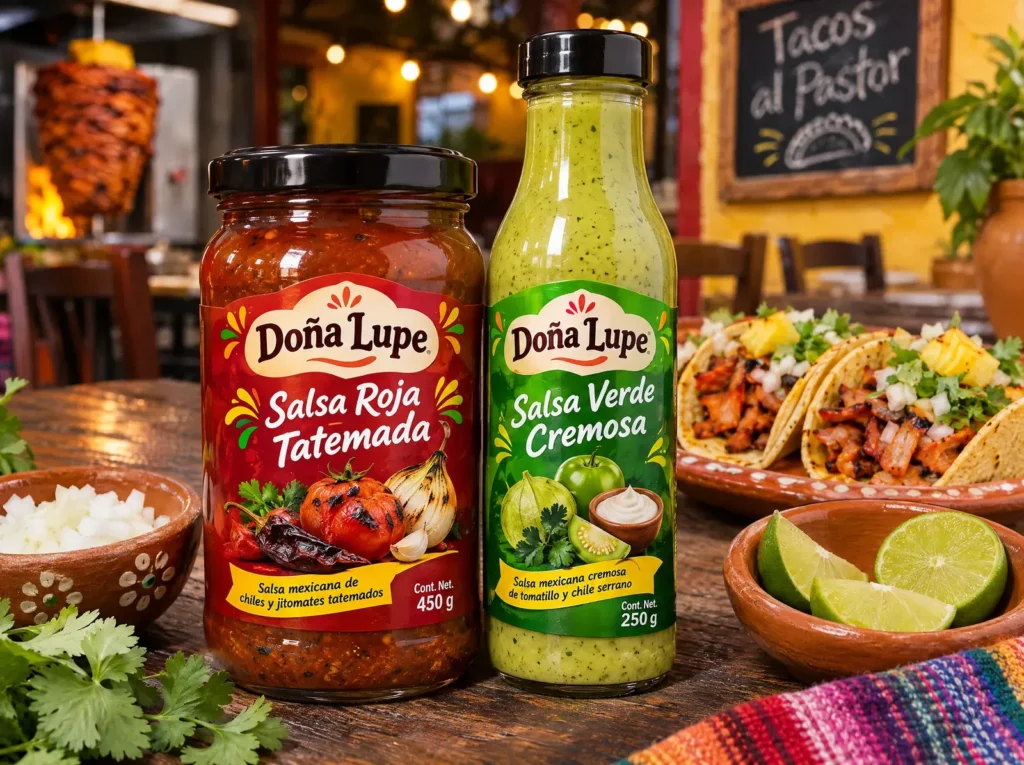
Hot sauce bottles at a taco stand with gloss laminated paper labels

True color

Excellent image and fine text reproduction.

Cost-efficient

The best option for high volumes.

Can be protected

Gloss or matte lamination and UV varnish.

Writable

Bond accepts ink, pencil and office printing.

Paper types

Four paper options for your label

We help you choose the paper based on where your product will be stored and used.
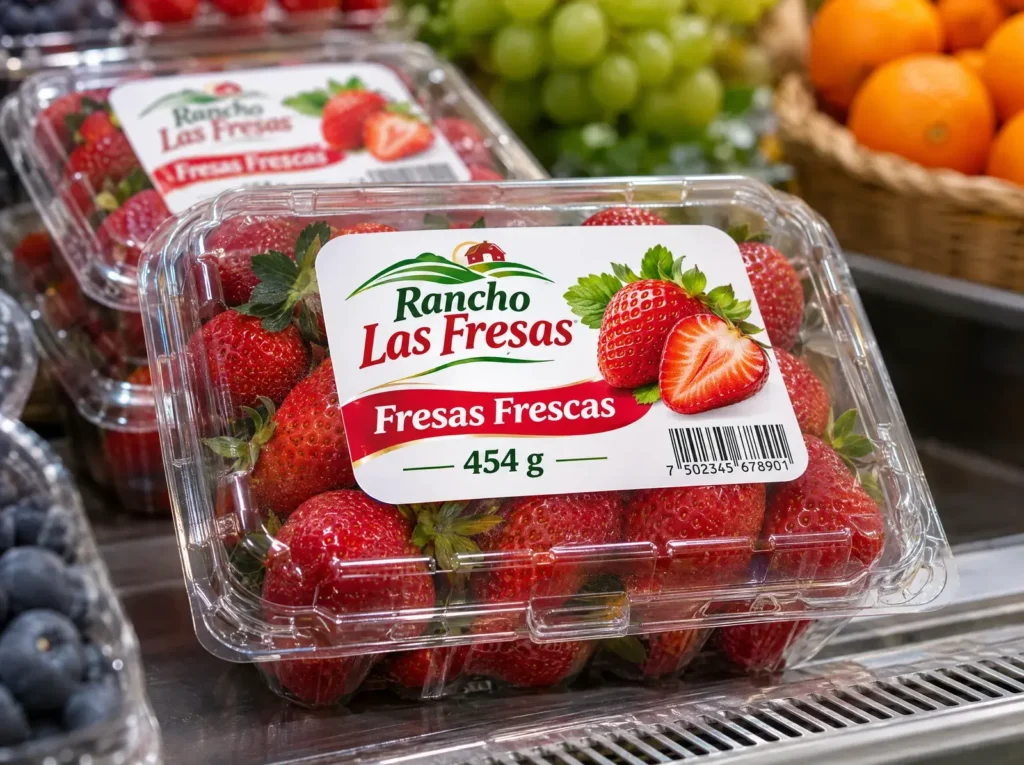
Strawberry clamshells on a supermarket shelf with coated paper adhesive labels

Coated paper

Smooth, glossy surface that makes photos and colors pop.

Ideal for: dry foods, agro and retail.

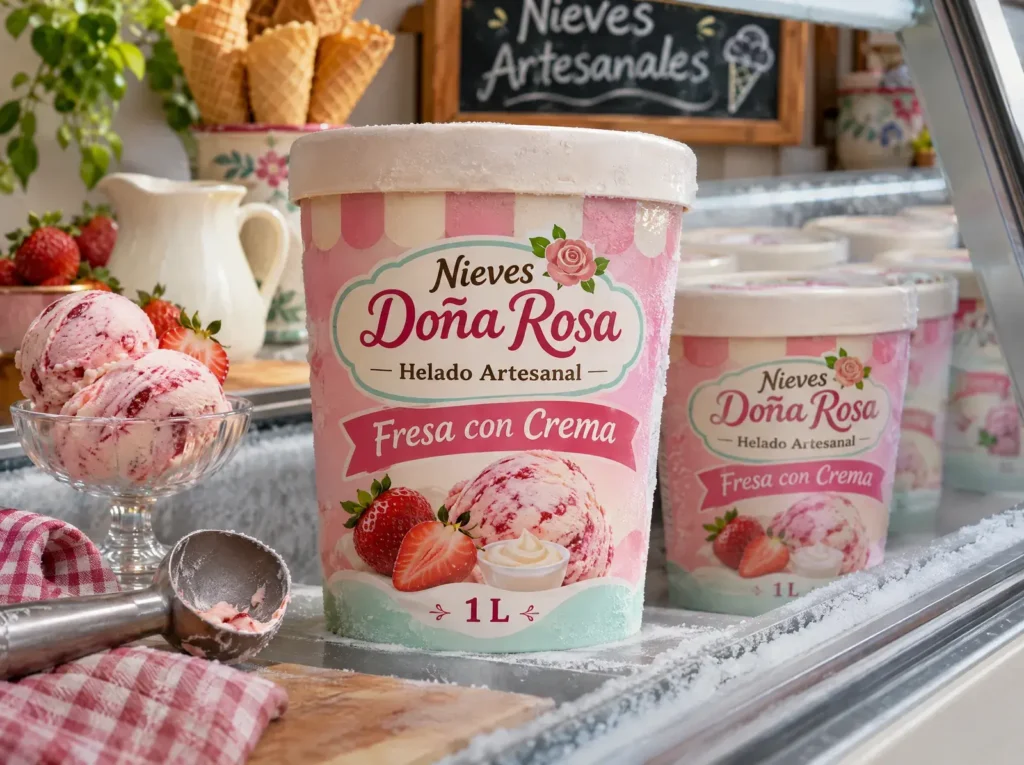
Artisan ice cream tubs at an ice cream shop with freezer-grade laminated paper labels

Laminated coated paper

Coated paper with gloss or matte lamination that protects it from scuffing and light moisture.

Ideal for: sauces, frozen foods and ice cream.

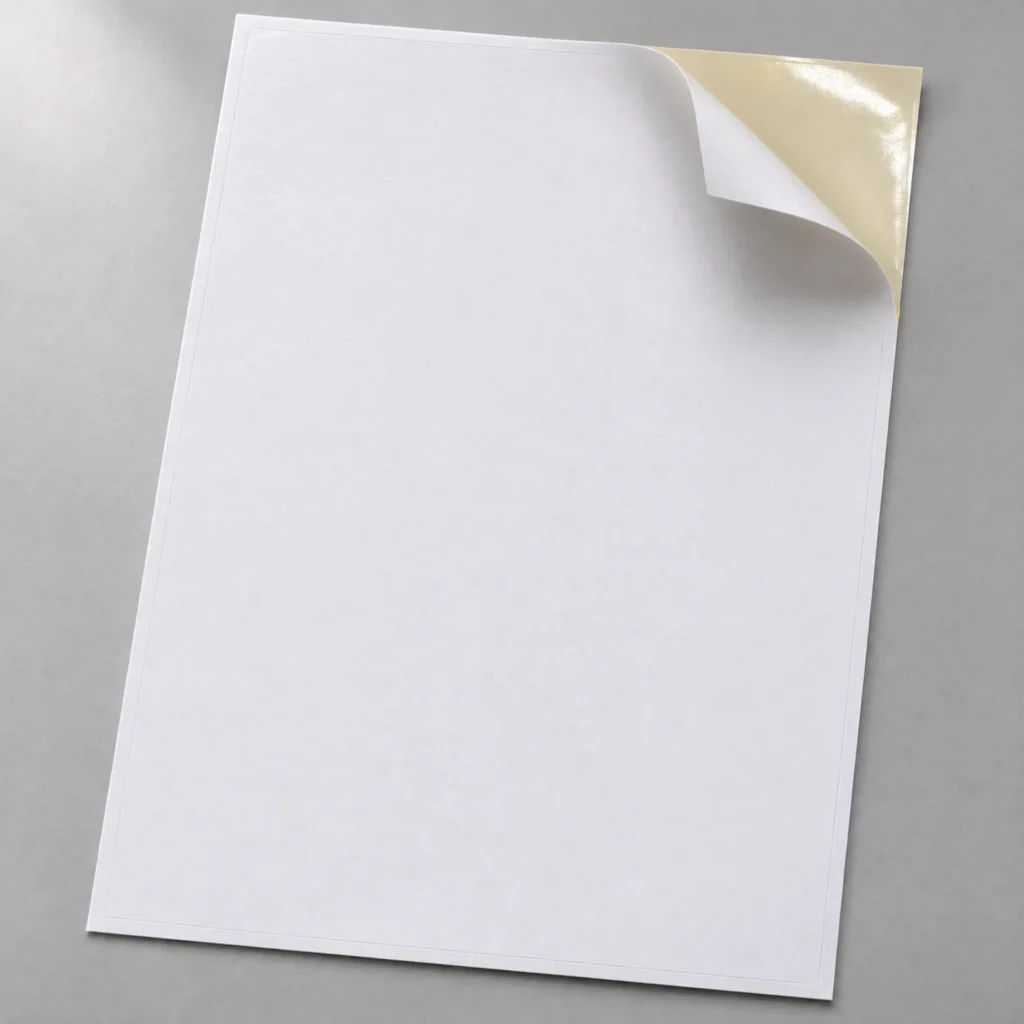
Hoja de etiqueta adhesiva de papel bond blanco con una esquina despegada del liner

Bond paper

Uncoated paper that accepts writing and office printing.

Ideal for: inventory, lots and internal use.

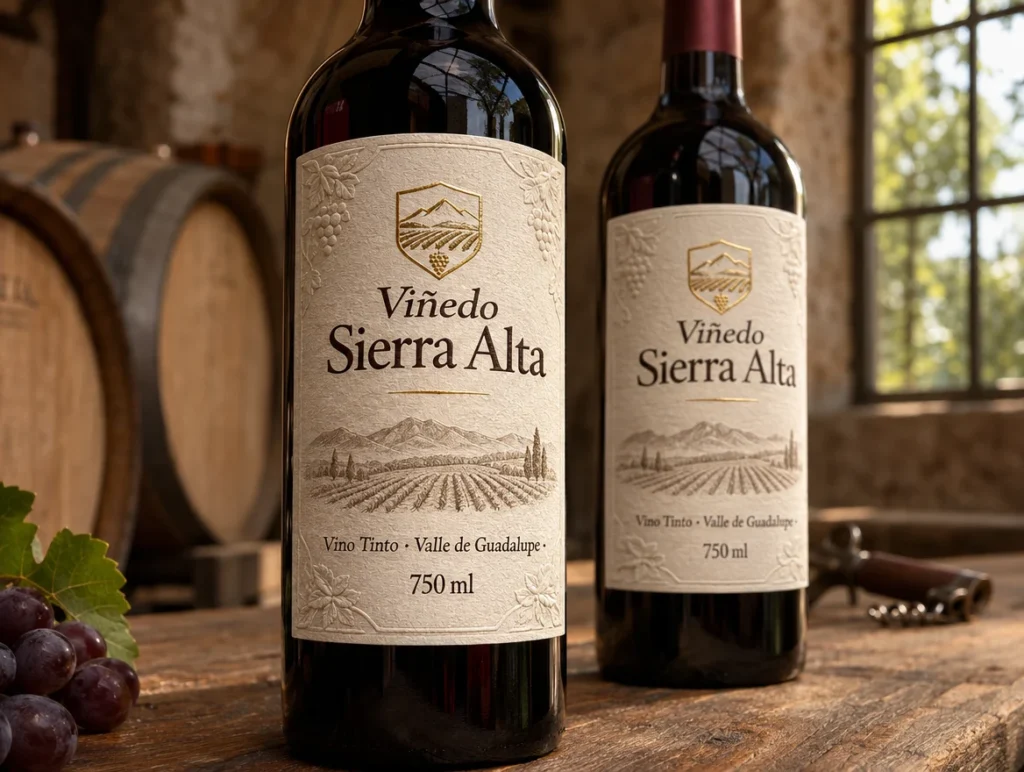
Botellas de vino tinto en una cava con etiquetas de papel texturizado para vinos con hot stamping dorado

Special wine papers

Textured and laid papers with a handcrafted look, resistant to the ice bucket.

Ideal for: wine, liquor and spirits.

Where it works best

When another material makes sense

Unprotected paper isn’t the best option for very humid environments. In those cases we recommend:

Guide

How to choose paper labels

Paper is still the most widely used material in self-adhesive labels thanks to its cost and print quality. Choosing the right type of paper, protection and adhesive makes the difference between a label that shines and one that wrinkles.

Coated paper: color and gloss

Coated paper has a layer that gives it a smooth, uniform surface. Thanks to it the inks stay on the surface, and colors, photos and fine text look sharp. It’s the most common choice for dry foods, groceries and agricultural products.

With flexography in up to 8 colors and water-based and UV inks, coated paper faithfully reproduces your brand colors.

Bond paper: for writing and printing

Bond is an uncoated, matte paper that accepts writing with pen or pencil and office printing. It’s used for inventory labels, internal control, hand-filled lots or filing.

It isn’t the best option if you want vivid colors or moisture resistance, but it’s practical and economical for internal use.

Lamination and varnish: protection

Unprotected paper absorbs moisture and gets scratched with handling. A gloss or matte lamination adds a film that protects the print from scuffing, light moisture and grease. UV varnish provides protection and gloss at a lower cost.

That way, a paper label can work on sauces, ice cream or heavily handled products without switching to a plastic material.

Special wine papers

Wine papers have textures, such as laid finishes, that convey a handcrafted, premium look. They are also treated to withstand ice-bucket moisture without falling apart.

They pair very well with hot stamping, embossing and spot varnishes, so your bottle communicates the quality of what’s inside.

Paper for food

We have papers and adhesives approved for direct and indirect food contact according to FDA. If the label may touch the product, as with fruit, bread or cheese, we choose a construction approved for direct contact.

For containers where the label doesn’t touch the food, we use indirect-contact constructions with the adhesive your container requires.

The right adhesive

The adhesive changes based on surface and temperature. A permanent adhesive works for most dry containers; a removable one comes off without leaving residue; and a refrigeration or freezer adhesive holds firm in the cold.

If your product is refrigerated or frozen, consider laminated paper or self-adhesive BOPP, because plain paper can absorb condensation moisture.

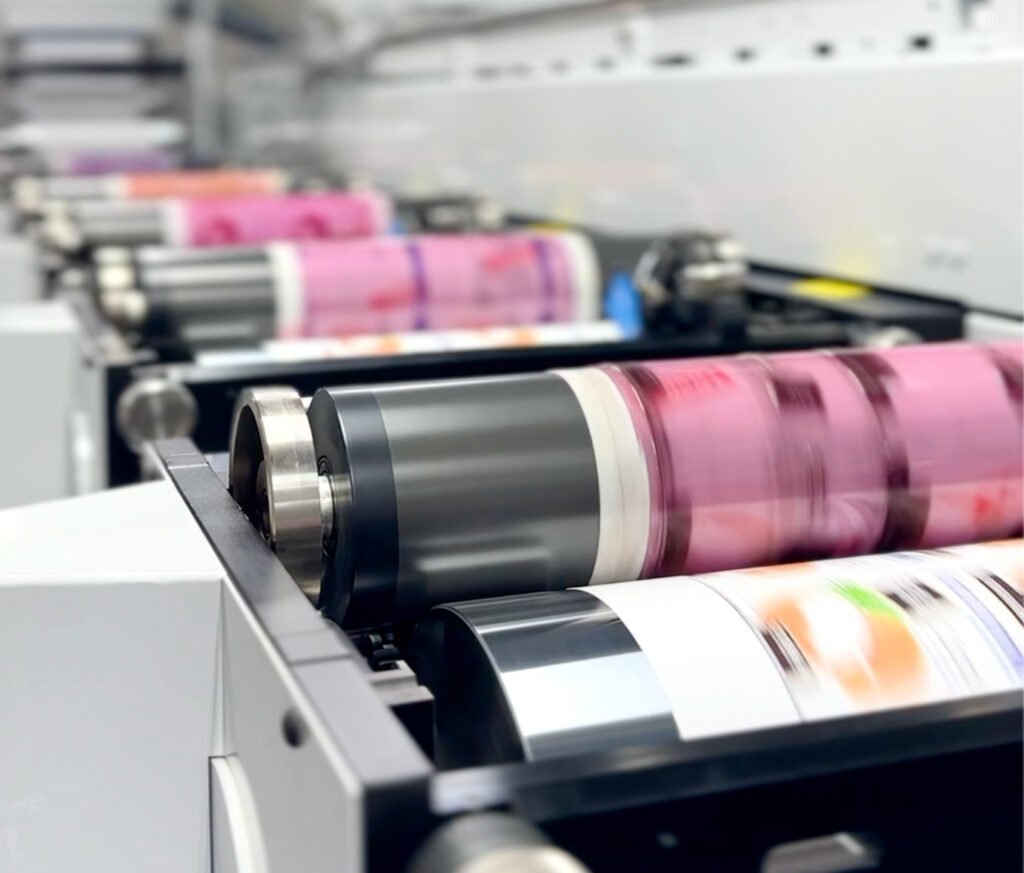
impresora flexográfica

Technology

Narrow-web flexography up to 8 colors

Our printing and rewinding equipment lets us produce demanding labels at scale without compromising quality.

Compatible finishes

UV varnish
Gloss lamination
Matte lamination
Embossing
Cold foil
Hot stamping
Printing on the adhesive side

How we work

From your artwork to your production line

01

Send us your artwork

Share your design, dimensions, quantities and where the label will be applied.

02

We recommend

Together we choose the material, adhesive and finish for your application.

03

We print and inspect

We produce with flexography and inspect 100% of the labels.

04

We deliver

You receive your rolls ready for your line, anywhere in Mexico.

FAQ

Your questions, answered

What we are asked most often before a quote. If you can’t find your answer, write to us.

What's the difference between coated and bond paper?

Coated paper has a layer that gives it gloss and makes colors look more vivid. Bond has no gloss and can be written on, which is why it’s used for inventory or hand-filled data.

Do paper labels resist moisture?

Unprotected paper doesn’t. With lamination or varnish it withstands light moisture and scuffing. For the shower, refrigeration or oils we recommend self-adhesive BOPP.

Do you make wine labels?

Yes. We print on special papers for wine and liquor, textured and resistant to ice-bucket moisture, with finishes such as hot stamping and embossing.

Do you have paper approved for food contact?

Yes. We carry materials and adhesives approved for direct and indirect food contact according to FDA.

What is the minimum order?

It depends on the size and design of the label. We quote each product separately.

What core size are the rolls delivered on?

We deliver on 3-inch cores, with the unwind direction your labeler requires.

Does coated paper work for refrigeration?

With lamination and a cold-temperature adhesive it works in light refrigeration. If there’s a lot of condensation we recommend self-adhesive BOPP.

Which is better, lamination or varnish?

Lamination protects more against scuffing and moisture; UV varnish is more economical and gives a good finish on products with little handling.

Can you match my brand colors?

Yes. In our ink lab we match your Pantone and brand colors with a tolerance of ±3.0 Delta E.

Do you have a quality certification?

Yes. Our quality system is ISO 9001:2015 certified and every lot ships with its certificate of quality.

Does your product need paper labels?

Tell us about your product and we will recommend the paper, adhesive and finish.