Flexography is a printing process widely used in industry to produce labels, packaging and other printed products. One of the fundamental parts of this process is the flexographic plate, which plays a key role in print quality and accuracy. In this article we look at the different flexographic plate technologies, their benefits and challenges, and dive into the concept of flat-top dots, an essential element of high-quality flexography.
How do we choose the flexographic plates for our labels?
Several technologies are used to make flexographic plates, each with its own characteristics and benefits. Some of the most common include:
- Analog: These plates are imaged by exposing the photosensitive plate to a light source through a high-resolution film negative. Analog plates are widely used because of their relative simplicity and ability to produce high-quality results.
- Digital: Digital plates are imaged with laser technology directly on the plate surface. This offers greater precision and flexibility in the print patterns, enabling higher quality and detail in image reproduction.
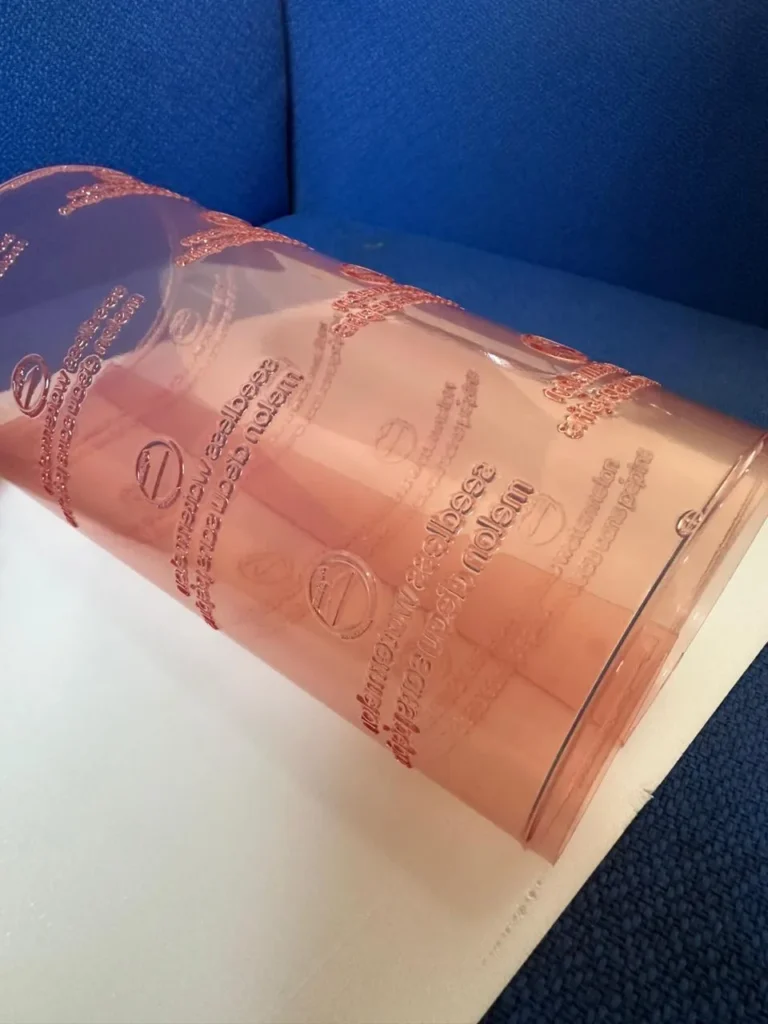
Benefits and challenges of flexographic plates
Flexographic plates offer many benefits for flexographic printing, including:
- Versatility: Flexographic plates work on a wide range of substrates, such as paper, board, plastic and metal, making them ideal for different applications and industries.
- High production speed: Flexography allows fast printing speeds, making it an efficient option for mass production.
- Print quality: With advanced technologies and good control of variables, flexographic plates can achieve exceptional print quality, with vibrant colors, sharp details and accurate reproduction of images and text.
There are also challenges associated with flexographic plates, such as the need for precise pressure and alignment adjustments to achieve uniform printing, and proper management of flat-top dots, a fundamental aspect of flexography.
Flat-top dots in flexography
The flat-top dot is a key concept in flexography. It refers to the shape of the smallest dots that can be printed from a flexographic plate. A flat-top dot sits correctly on the substrate without being crushed or deformed, which allows even ink transfer and accurate reproduction of the finest details.
At Excelpack we understand the importance of flexographic plates in the printing process. We use advanced technologies and high-quality materials so our plates meet the highest standards of quality and precision. Our team can offer specialized advice and tailored solutions when choosing flexographic plates, ensuring outstanding results in your flexographic printing projects.
Flexographic plates are essential components for good flexographic printing. With the right technologies and good control of variables, they offer significant benefits and deliver high-quality results. The flat-top dot plays a fundamental role in flexography, ensuring precise and detailed printing.